
The Complete Solar & Battery Combined System Guide
A combined solar-and-battery system pairs rooftop solar panels with a battery so your Scottish home stores surplus daytime generation for evening and overnight use. This guide covers every component, how it fits Scottish conditions, inverters, sizing, and the installation process — with no obligation.
iKey facts
- A combined system includes solar panels, a hybrid inverter, a battery, and a monitoring app.
- The hybrid inverter prioritises home use, then battery charging, then grid export.
- Solar panels generate from daylight — including diffuse light on overcast days.
- A battery stores daytime surplus so your home runs on solar into the evening.
- 0% VAT applies to residential solar and battery installations until 31 March 2027.
- Installation typically takes one to two days for a standard residential property.
- Interest-free credit up to £30,000, subject to status.
Last updated: 30 October 2026
This guide explains everything a Scottish homeowner needs to understand about a combined solar-and-battery system — what each part does, how it works together, how it performs in the Scottish climate, and how the installation process works. If you're starting from scratch and want one system that covers generation and storage, this is the guide for you.
What is a combined solar-and-battery system?
A combined system has four main parts working together:
- Solar panels (modules) — mounted on your roof, these generate direct current (DC) electricity from daylight.
- Hybrid inverter — the brain of the system. It converts DC from the panels to alternating current (AC) for your home, and manages the battery: charging it when there's surplus solar, discharging it when your home needs power.
- Battery — stores electricity for use when your panels aren't generating (evening, night, dull days).
- Monitoring app — shows real-time generation, battery state, home consumption, and grid import/export.
Together, these let you generate your own electricity, store what you don't use immediately, and draw from the battery before the grid — meaning more of your consumption is covered by your own solar generation.
How a hybrid inverter works
The hybrid inverter is what makes a combined system more than just panels plus a battery. During the day, it prioritises sending solar electricity to your home. If your home is using less than the panels produce, the surplus goes to charge the battery. Only when the battery is full does surplus go to the grid. In the evening, when your panels stop producing, the inverter draws from the battery to power your home, only importing from the grid when the battery is empty.
This priority order — home first, battery second, grid last — is what maximises self-sufficiency. Some hybrid inverters also support backup power mode, keeping essential circuits running during a power cut (ask the surveyor if this is relevant to you).
Solar panels in the Scottish climate
Scotland has a reputation for clouds and rain, but solar panels work on daylight, not just direct sunshine. Modern panels convert both direct and diffuse (cloud-scattered) light into electricity. What matters is the total daylight energy reaching the panel over the year.
Scottish summer days are long — in June, the Central Belt gets around 17 hours of daylight and the far north nearly 18. This means a Scottish solar array can generate substantial electricity from May through August. Winter is the trade-off: December days can be as short as seven hours in Glasgow and around six in Inverness, and output is lower. Across the year, a well-designed Scottish system generates meaningful electricity in every month.
Why a battery matters in Scotland
Without a battery, surplus solar generation during the day is exported to the grid — useful, but you then buy electricity back in the evening at your normal rate. A battery closes that loop: it stores your surplus so your home runs on solar after the sun goes down.
In Scotland this is especially valuable because our generation is concentrated in the middle of the day and in the summer months. A battery lets you time-shift that production to when you actually need it — evenings, early mornings, and winter days when generation is low.
Winter daylight in Scotland
Being realistic about winter is important. In the depths of December, a Scottish solar array generates a fraction of what it produces in June. A battery helps by storing whatever you do generate, but in winter most households still import from the grid for a significant share of their consumption.
This is where a time-of-use tariff (if you're on one) can help: you charge the battery from the grid during cheaper off-peak hours and use that stored electricity during peak hours. The combined system is designed for the full year, not just summer.
Time-of-use tariffs explained (generally)
Some energy suppliers offer tariffs where the price of electricity varies by time of day. Typically, electricity is cheaper during off-peak hours (often overnight) and more expensive during peak hours (late afternoon and evening). With a battery, you can:
- Charge the battery from solar during the day (when it's available)
- Charge the battery from the grid during cheaper off-peak hours (when solar isn't enough)
- Discharge the battery during peak hours to avoid paying the higher rate
We don't quote specific tariff rates on this page — they change frequently and vary by supplier. If you're on, or considering, a time-of-use tariff, the surveyor can discuss how a battery would work with it.
Roof orientation and shading
Your roof has a big influence on system design. Key factors:
- Orientation — south-facing roofs produce the most total energy. East-west roofs produce slightly less but spread generation across the day, which pairs well with a battery.
- Pitch — most UK roofs are between 30 and 40 degrees, which works well for solar. The surveyor measures your exact pitch.
- Shading — chimneys, neighbouring buildings, and trees can shade parts of your roof at certain times. The surveyor identifies shading and may recommend panel-level optimisers if needed.
- Usable area — obstructions like velux windows, chimney stacks, and roof lights reduce the space available for panels.
Battery sizing for a combined system
The right battery capacity is the one that stores your typical daily solar surplus — not so small that you export excess to the grid, and not so large that your panels never fill it. For most Scottish homes, a battery between 5 and 15 kWh is appropriate, but the right size depends on your usage. Our battery sizing guide covers this in depth.
The installation process
Installation of a combined system typically takes one to two days for a standard residential property. The process is:
- Scaffolding is erected for safe roof access
- Mounting rails are fixed to your roof structure
- Panels are attached and wired into strings
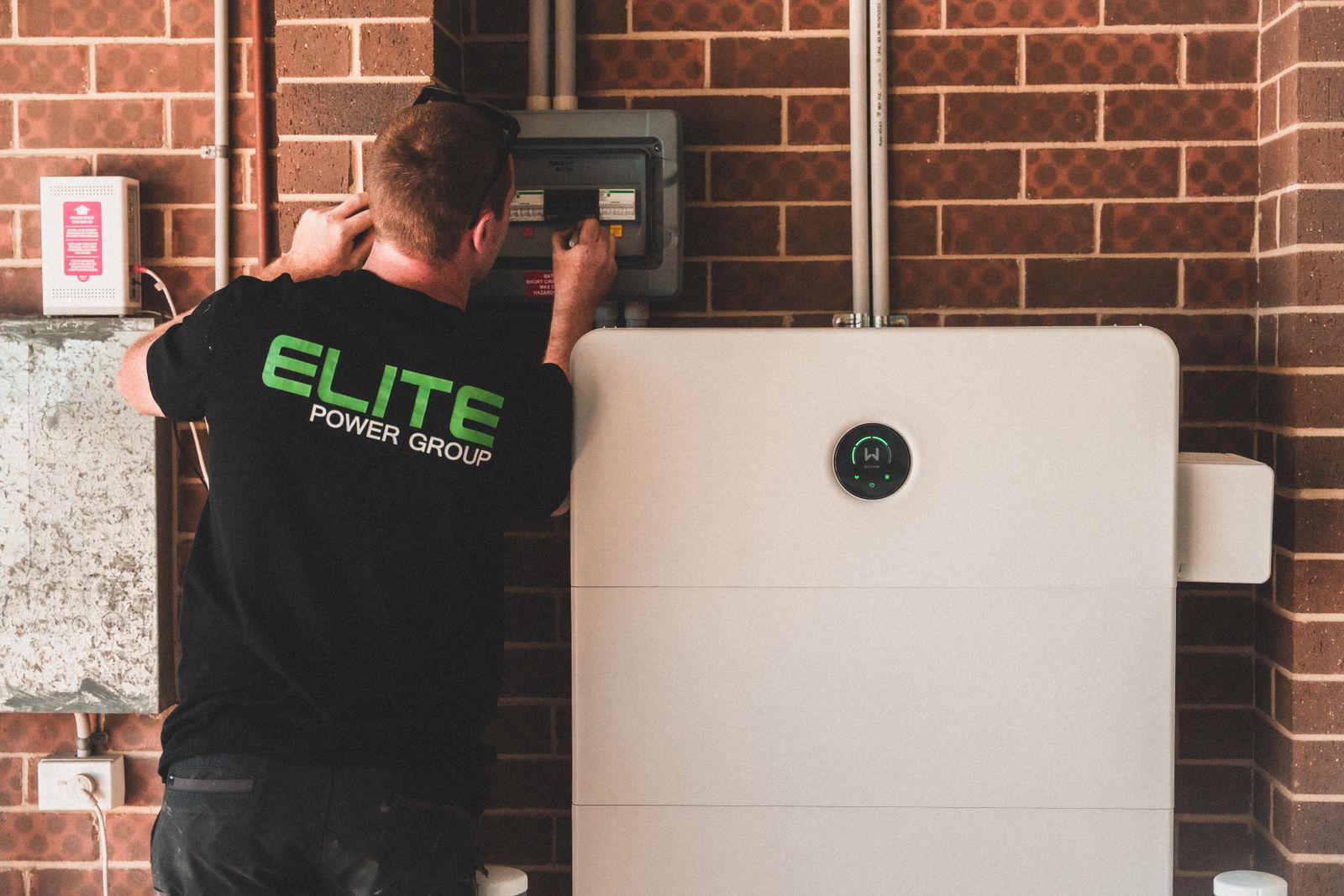
- The hybrid inverter and battery are installed in your chosen location (garage, utility room, or internal wall)
- The system is connected to your consumer unit and commissioned
- The monitoring app is set up and the installer walks you through how it all works
After installation, our MCS-certified partner registers the system with MCS and notifies your DNO. You receive the MCS certification paperwork for your records.
0% VAT and finance
Combined solar-and-battery systems for residential installations carry 0% VAT until 31 March 2027. Interest-free credit up to £30,000, subject to status. Written, itemised quote, no pressure.
Is a combined system right for you?
A combined system is the best choice if you don't yet have solar panels and want to generate and store your own electricity. If you already have panels, see our add-a-battery guide instead. The only way to know what's right for your home is a survey — request one here with no obligation.
Frequently asked questions
What does a combined solar-and-battery system include? +
How does a hybrid inverter differ from a string inverter? +
Does a combined system work in the Scottish winter? +
How long does installation take? +
Is there 0% VAT on a combined system? +
Do you offer finance? +
Last updated: 30 October 2026
Reviewed by the Scottish Energy Efficiency team.