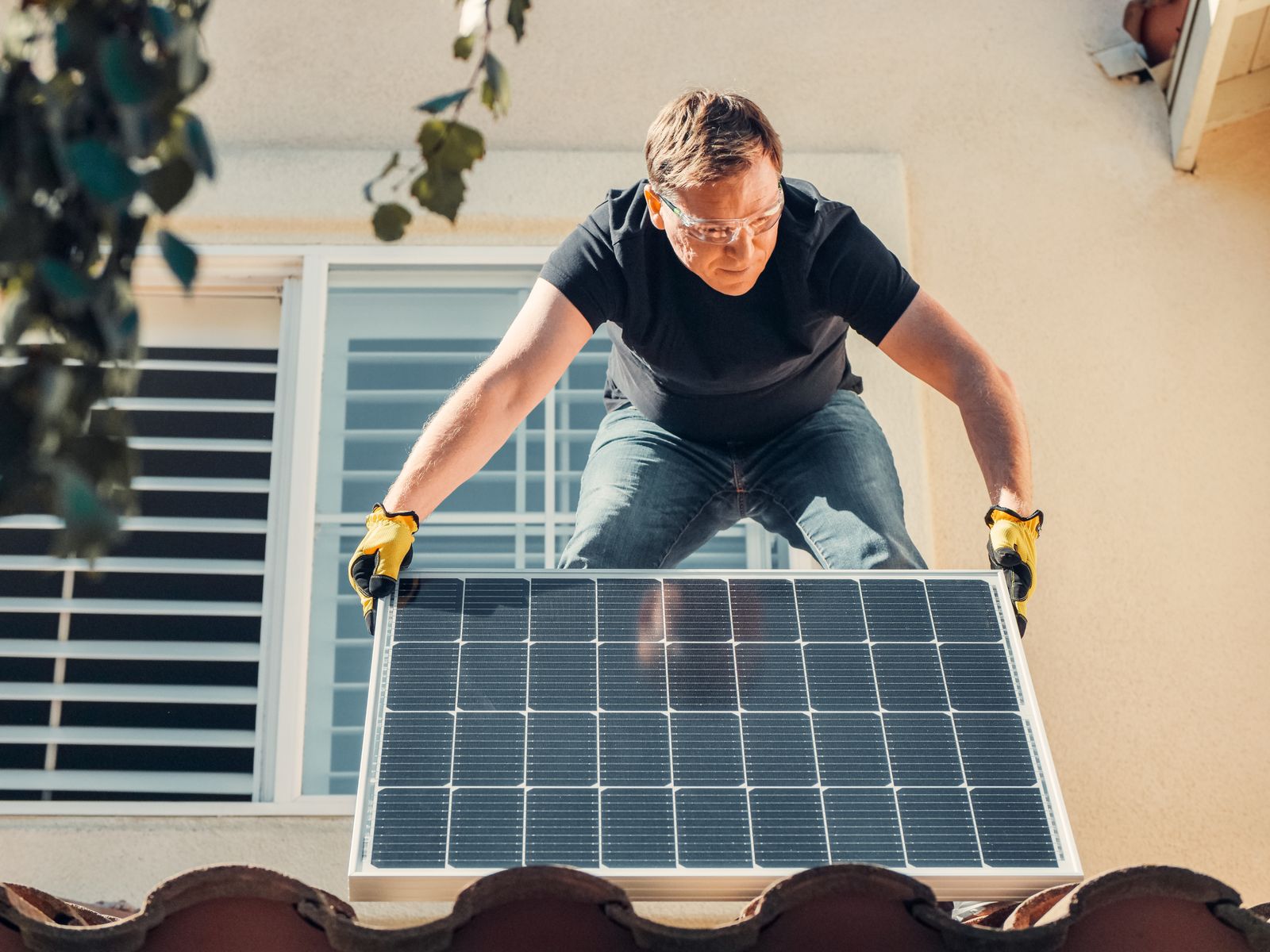
How Solar & Battery Installation Works
The process is simple: you enquire, we arrange a no-obligation survey at your home, you receive an itemised written quote, and if you choose to proceed our MCS-certified partner installs and commissions your system — usually within a day or two. No pressure at any stage.
iKey facts
- The process has six steps: enquiry, survey, quote, scheduling, installation, and MCS paperwork.
- The survey is no-obligation, takes about an hour, and is free of charge.
- Your written quote reflects 0% VAT until 31 March 2027.
- Installation is typically completed within one to two days for a standard residential system.
- Our MCS-certified partner handles installation, commissioning, and MCS registration.
- You receive MCS certification paperwork and DNO notification after installation.
- Interest-free credit up to £30,000, subject to status.
Last updated: 30 October 2026
Getting a solar-and-battery system installed in your Scottish home should be straightforward and transparent. Here's the full process from first enquiry to a working system on your roof, with no obligation at any stage.
Step 1 — Your enquiry
It starts when you get in touch, either through the quote form on this site or by calling 0141 230 0198. We ask for your name, contact details, postcode, and a brief idea of what you're interested in — a combined system, adding a battery to existing solar, or battery storage alone. You don't need to know anything about solar technology at this stage; that's what the survey is for.
Step 2 — The no-obligation survey
We arrange a survey at a time that suits you. The surveyor visits your home and assesses:
- Your roof — usable area, orientation (south, east, west), pitch, and any shading from chimneys, trees, or neighbouring buildings.
- Your existing electrical set-up — consumer unit location, capacity, and whether any upgrade is needed.
- Your energy usage — how much electricity your household uses and when, so the system can be sized to your actual needs.
- If you have existing solar — the inverter type, panel count, and how a battery can be integrated.
- Where the battery and inverter would be installed — typically a garage, utility room, or internal wall.
The survey takes around an hour. There's no pressure and no cost — the aim is to gather the information needed to give you an accurate recommendation and quote.
Step 3 — Your written quote
After the survey you receive an itemised written quote. This sets out the recommended system — number and type of panels, battery capacity, inverter, mounting system, and all installation work — with the total cost reflecting 0% VAT (applicable until 31 March 2027). The quote also explains the expected generation and how the battery integrates with your usage.
You take as long as you like to decide. There's no follow-up pressure — if the quote isn't right for you, that's fine. If you want to adjust the system, the surveyor can revise it.
Step 4 — Scheduling the installation
If you choose to go ahead, we schedule the installation with our MCS-certified partner. Installations are typically arranged within a few weeks of accepting the quote, weather permitting. You'll receive a clear timeline and know what to expect before the team arrives.
Step 5 — Installation day
A standard residential solar-and-battery installation is usually completed within one to two days. The process typically runs like this:
- Scaffolding is erected first to provide safe access to the roof.
- Roof work — the mounting rails are fixed to your roof structure, and panels are attached and wired in strings.
- Inverter and battery are installed in the agreed location and wired into your electrical system.
- Consumer unit connection — the system is connected to your main electrical supply through a dedicated circuit.
- Commissioning — the installer tests the full system, configures the inverter and battery settings, and sets up your monitoring app.
The installation team is from our MCS-certified partner and works to recognised industry standards. They'll walk you through the system before they leave and answer any questions.
Step 6 — MCS paperwork and aftercare
Once the installation is complete and commissioned, our partner registers the system with MCS, providing you with the certification paperwork. This is your record that the installation meets the Microgeneration Certification Scheme standard. The DNO is also notified that your generation system is connected to the network.
Your monitoring app shows real-time generation, battery charge and discharge, and home consumption. Solar panels are essentially maintenance-light — they benefit from occasional cleaning, and the inverter and battery require no routine servicing. The system is designed to run quietly and automatically for years.
Ready to start?
The first step is a no-obligation survey. There's no cost and no pressure — just clear information about what a system would look like and cost for your home.

Frequently asked questions
How long does installation take? +
Is there any obligation after the survey? +
Will I need scaffolding? +
Do I need to be home during installation? +
What certification do I receive? +
Last updated: 30 October 2026
Reviewed by the Scottish Energy Efficiency team.