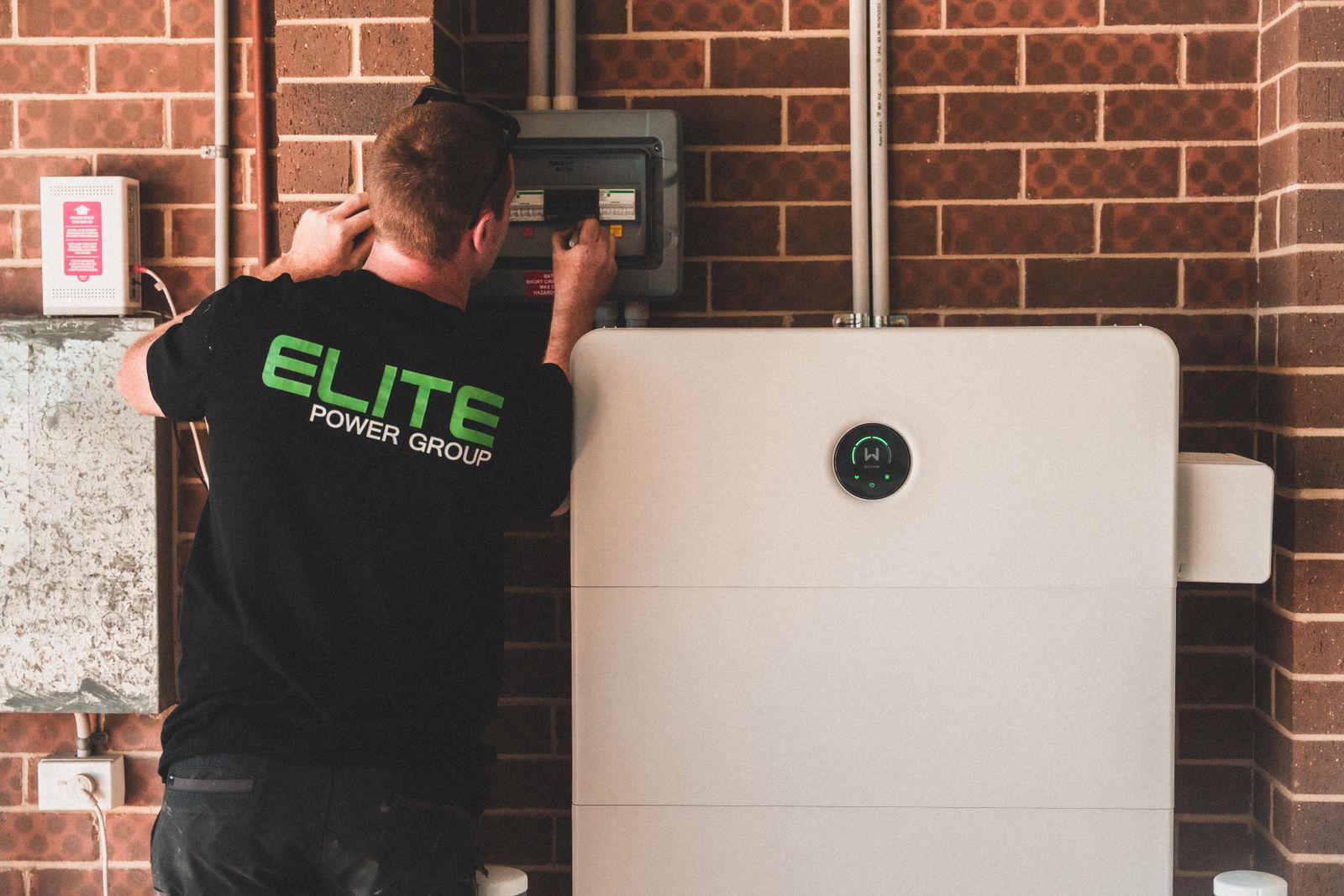
Add a Battery to Your Existing Solar Panels
If you already have solar panels, adding a battery lets you store the surplus you currently export to the grid and use it in the evening and overnight. This guide covers compatibility, AC-coupled vs hybrid inverter upgrades, sizing, and the retrofit process for Scottish homes.
iKey facts
- Most existing solar systems can have a battery added — either AC-coupled or via a hybrid inverter upgrade.
- AC-coupled batteries work with virtually any existing inverter and are the most common retrofit.
- A battery stores surplus you currently export, so you use it in the evening instead of buying back.
- Retrofit installation typically takes about a day with no roof work needed.
- 0% VAT applies to residential battery storage until 31 March 2027.
- Interest-free credit up to £30,000, subject to status.
Last updated: 30 October 2026
Many Scottish homes had solar panels installed without a battery — often because when the panels went up, battery storage was less common and more expensive. Today, adding a battery to an existing solar system is one of the most worthwhile upgrades you can make, and in most cases it's a straightforward retrofit.
Why add a battery to existing solar?
Without a battery, the surplus electricity your panels generate during the day — the amount your home doesn't use at that moment — flows out to the grid. You may receive a modest payment for exported energy, but you then buy electricity back in the evening at your normal rate. Adding a battery closes that loop: it stores your daytime surplus so your home runs on your own solar after the panels stop producing.
For Scottish homes this is particularly valuable because our generation is concentrated in the middle of the day. A battery time-shifts that production to the evening and overnight, when you're actually home and using electricity.
How it works: AC-coupled vs DC-coupled
There are two main ways to add a battery to an existing solar system, and which is right for you depends on your current inverter.
AC-coupled battery (most common retrofit)
An AC-coupled battery has its own inverter built in. Your existing solar inverter continues to work exactly as before — converting DC from your panels to AC for your home. When there's surplus solar, the battery's inverter takes that AC electricity, converts it back to DC to charge the battery, and then inverts it back to AC when discharging to your home.
This is the most common retrofit approach because it doesn't require changing your existing inverter, and it works with virtually any solar set-up. The slight downside is a small efficiency loss from the extra AC-to-DC-to-AC conversion, but in practice this is minor.
Hybrid inverter upgrade (DC-coupled)
If your existing inverter is older or due for replacement, upgrading to a hybrid inverter can be a cleaner option. A hybrid inverter manages both the panels and the battery in one unit, charging the battery directly from the panels' DC output without the extra conversion step. This is marginally more efficient but requires replacing your current inverter, so it's typically chosen when the existing unit is end-of-life or when you want a single integrated system.
Assessing your existing system
During the survey, the surveyor checks several things to recommend the best approach:
- Your current inverter — make, model, and age. This determines whether an AC-coupled battery or a hybrid upgrade is more appropriate.
- Panel capacity and count — how much your array generates and when, so the battery can be sized to match your typical surplus.
- Your daily usage pattern — how much electricity you use in the evening vs during the day, which determines how much storage is useful.
- Installation location — where the battery and (if needed) its inverter will go. Batteries are typically wall-mounted in a garage, utility room, or internal cupboard.
- Your consumer unit — whether any electrical upgrade is needed to integrate the battery.
Battery sizing when you already have solar
If you've had solar for a while, you have a useful advantage: you know how much surplus your panels typically produce. The surveyor can look at your generation data (if you have a monitoring app) to understand your typical daily export, which makes sizing the battery more precise.
The right capacity is the one that stores your typical daily surplus. If your panels regularly export 6–8 kWh on a summer day, a battery around that size will capture most of it. Oversizing beyond your typical surplus adds cost without benefit. See our battery sizing guide for the full methodology.
The retrofit installation process
Adding a battery to existing solar is generally quicker than a full combined installation because the panels and their mounting are already in place. A typical retrofit takes about a day:
- The battery unit is wall-mounted in your chosen location.
- If AC-coupled, the battery's inverter is installed alongside it. If upgrading to a hybrid inverter, your existing inverter is replaced.
- The battery is wired into your consumer unit through a dedicated circuit.
- The system is commissioned and configured to charge from solar surplus and discharge to your home.
- Your monitoring app is updated (or a new one set up) so you can see battery charge, discharge, and home consumption.
No roof work is needed — the existing panels stay exactly where they are.
Can any solar system have a battery added?
In the large majority of cases, yes. AC-coupled batteries work with virtually all existing solar set-ups. The main considerations are the age and condition of your existing inverter, and whether your consumer unit has capacity for the additional circuit. The surveyor confirms what's possible for your specific system.
0% VAT and finance
Adding a battery to an existing residential solar system carries 0% VAT until 31 March 2027. Interest-free credit up to £30,000, subject to status. Every quote is written and itemised.
Ready to explore adding a battery?
If you have solar panels and want to understand what adding a battery would look like for your home, the next step is a no-obligation survey. Request a quote or call us on 0141 230 0198.

Frequently asked questions
Can I add a battery to any existing solar system? +
Do I need to replace my existing inverter? +
How long does a battery retrofit take? +
How do I know what size battery to add? +
Is there 0% VAT on adding a battery? +
Last updated: 30 October 2026
Reviewed by the Scottish Energy Efficiency team.